


Avent Bottle Cleaner: What Parents Need to Know in 2026
Looking for an avent bottle cleaner solution? Learn the best cleaning methods, products, and what actually works for Avent bott...

Malaysia opens my.nuviebaby.com, prices in RM.

You're standing at the sink at midnight, scrubbing dried milk from the bottom of another bottle, and wondering if there's a better way. Cleaning tablets promise to cut through the grime and sanitise everything your baby puts in their mouth, but the options feel overwhelming. Some claim to be plant-based, others promise hospital-grade sterilisation, and a few raise red flags about residue and chemical nasties. This guide cuts through the marketing noise to help you find the best cleaning tablets for baby bottles that actually work, won't harm your baby, and might just give you ten minutes back in your day.
Not all cleaning tablets are created equal. Baby bottles need more than just "clean", they need safe. Your baby's immune system is still developing, and anything left behind on a bottle goes straight into their mouth.
The NHS recommends thorough sterilising for all bottles and teats, particularly in the first 12 months. That means your cleaning tablet needs to do two jobs: remove milk residue and proteins without leaving harmful chemicals behind.
When evaluating the best cleaning tablets for baby bottles, check the ingredient list first. Avoid anything with:
Look instead for certifications from bodies like the EPA's Safer Choice program or independent testing that verifies both cleaning power and rinse-away performance. Research on dishwasher detergent residues shows that some common formulas leave behind compounds that can cause epithelial damage, a risk you absolutely don't want to take with baby bottles.
Good tablets should:
Here's something nobody tells you: most standard dishwasher tablets create far too much foam for baby bottle cleaning, especially in automated or enclosed washing systems.
Traditional high-foam formulas were designed for large dishwashers with multiple rinse cycles. When you use them in a smaller, dedicated baby bottle washer or even hand-washing in a basin, the excess suds don't rinse away properly. You end up with cloudy bottles, a soapy taste, or worse, spots and residue that won't shift.
Low-foam formulas are engineered to clean effectively with minimal suds. This means:
| Feature | Traditional Tablets | Low-Foam Tablets |
|---|---|---|
| Suds volume | High | Minimal |
| Rinse cycles needed | 3-4 | 1-2 |
| Residue risk | Moderate to high | Very low |
| Machine compatibility | General dishwasher | Baby-specific washers |
| Ingredient load | Often harsh | Usually gentler |
If you're using a dedicated baby bottle washer, check whether the manufacturer requires or recommends a specific tablet formula. Many machines are designed around low-foam chemistry, and using the wrong product can void your warranty or damage internal components.
The best cleaning tablets for baby bottles use a specific blend of enzymes, surfactants, and sometimes oxygen-based sanitisers. Understanding what each ingredient does helps you make better choices.
Protease and lipase enzymes break down milk proteins and fats at a molecular level. They're highly effective and generally safe, but they need the right temperature and time to work. Most enzyme-based tablets perform best in warm water (40-60°C) and benefit from a soak or wash cycle of at least 10-15 minutes.
These reduce water's surface tension so the cleaning solution can penetrate into crevices and threads. The Environmental Working Group flags certain surfactants as hazardous, particularly those that don't biodegrade or leave persistent residues. Look for plant-derived surfactants like decyl glucoside or lauryl glucoside on the ingredient list.
A gentler alternative to chlorine bleach, oxygen bleach releases hydrogen peroxide when it dissolves in water. It's effective at sanitising and removing stains without the harsh fumes or residue risks. It's commonly used in eco-friendly formulas and breaks down into water and oxygen after use.
These bind to minerals in hard water (calcium, magnesium) so they don't form cloudy deposits on your bottles. Citric acid is a common, safe chelating agent. Avoid EDTA if possible, it doesn't biodegrade well and offers no advantage for baby bottles.
Your washing method determines which tablet will work best. Hand-washing parents have different needs than those using automated machines or steam sterilisers.
If you're scrubbing bottles by hand, you want a tablet that dissolves quickly in a basin of warm water and provides enough cleaning power without requiring aggressive scrubbing. Look for:
Dissolve one tablet in a basin, soak bottles and parts for 5-10 minutes, scrub, then rinse thoroughly under running water. Nationwide Children's Hospital recommends a two-step wash and rinse process to ensure all milk residue and detergent are removed.
Machines like the nuviebaby Clean require tablets specifically formulated for their internal spray jets, heating elements, and rinse cycles. Using ordinary dishwasher tablets can clog jets, leave residue, or damage seals.
Purpose-built tablets for automated washers are low-foam, dissolve at precise rates to match wash cycles, and won't harm internal components. They're calibrated to work with high-pressure spray systems and built-in steam sterilisation.
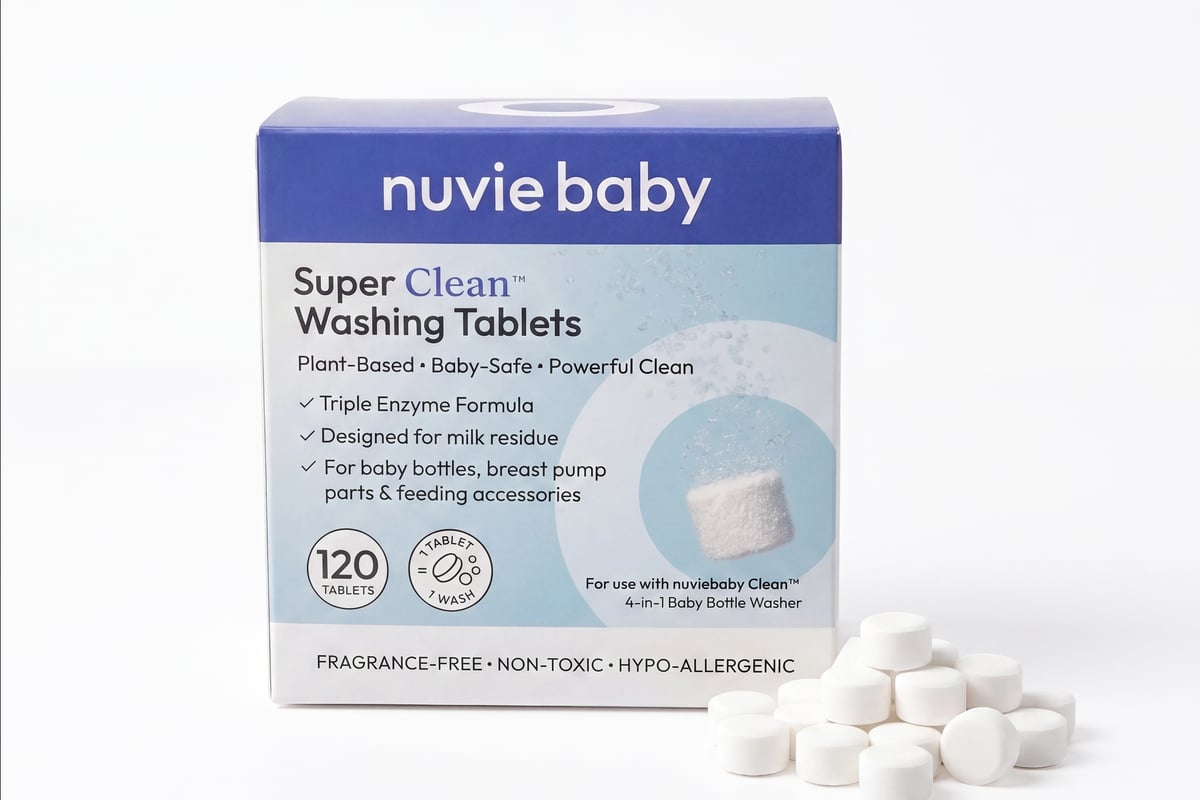
nuviebaby's proprietary tablets are designed to work in perfect sync with the Clean's 360° spray jets and multi-stage wash programme, ensuring every bottle comes out residue-free and safe. One tablet per cycle handles up to 8 bottles and a full pump parts set, making the maths simple and the results consistent.
If you sterilise bottles separately after washing, you still need an effective cleaning tablet to remove milk residue first. Research on infant formula bottle disinfection shows that sterilisation is only effective on clean surfaces, organic soil like dried milk will shield bacteria from heat and steam.
Choose a tablet that rinses completely before you load bottles into the steriliser. Residue can bake onto bottles during the steam cycle, creating a film that's almost impossible to remove.
Every brand slaps "natural" or "plant-based" on their packaging, but those terms aren't regulated. Some genuinely safer, eco-friendly tablets exist. Others are greenwashing.
Genuinely eco-friendly tablets:
Red flags for greenwashing:
The EPA's Safer Choice standard offers a credible framework for evaluating cleaning products. Products that meet this standard have been reviewed for ingredient safety, performance, and environmental impact.
If eco-credentials matter to you, read the full ingredient list, not just the marketing claims. A truly safe tablet doesn't need to hide what's inside.
Cleaning tablets range from 8p to 45p per wash depending on brand, format, and where you buy them. That adds up over months of daily bottle washing.
| Product Type | Price per Tablet | Tablets per Box | Cost per Month* |
|---|---|---|---|
| Budget supermarket tablets | £0.08-£0.12 | 30-40 | £2.40-£3.60 |
| Mid-range eco tablets | £0.18-£0.25 | 50-60 | £5.40-£7.50 |
| Premium baby-specific tablets | £0.28-£0.45 | 60-120 | £8.40-£13.50 |
*Based on washing once daily
The cheapest option isn't always the best value. If a budget tablet leaves residue, you'll waste time rewashing bottles or risk your baby refusing a bottle that tastes soapy. A premium tablet that works first time and protects your equipment pays for itself in saved effort and longer machine life.
For parents using an automated bottle washer, using the manufacturer's recommended tablets protects your warranty and prevents costly repairs from residue buildup or component damage. It's worth paying a bit more per wash if it means your £300-500 machine lasts years instead of months.
Even the best cleaning tablets for baby bottles can cause issues if you use them incorrectly or pick the wrong formula for your water type.
This usually means hard water minerals are bonding with soap residue. Solutions:
This is residue from tablets that don't rinse cleanly. It's not just unpleasant, it can put your baby off bottles entirely. Fix it by:
Milk proteins and fats need enzymes or very hot water to break down. If bottles still have a greasy film or cloudy patches:
Some harsh tablets can cause silicone teats to become sticky, polypropylene bottles to cloud permanently, or glass to etch. Avoid this by:
If you notice persistent spots or residue, you may need to descale your washing equipment or switch to a different tablet formula.
There's a difference between the tablets you use every day to wash bottles and the ones you use monthly to maintain your equipment.
These are formulated to remove milk, formula residue, and bacteria from bottles, teats, and pump parts. They're gentle enough for daily use on feeding equipment and designed to rinse away completely.
These contain stronger acids (usually citric, lactic, or formic acid) to dissolve limescale and mineral buildup inside your washing machine, kettle, or steriliser. Never use descaling tablets to wash bottles. They're too harsh for surfaces that touch food and often leave a residue that requires multiple rinses to remove.
If you use an automated washer, descale it monthly (or every two weeks with hard water) using proper descaling tablets. This keeps spray jets clear, heating elements efficient, and prevents mineral deposits from contaminating your clean bottles.
Marketing claims are easy. Independent lab testing is harder to fake. Consumer Reports regularly tests cleaning products for effectiveness, safety, and value, though their focus is general household cleaners, not baby-specific products.
For baby bottles, the metrics that matter most are:
Very few baby bottle cleaning tablets have published independent test results, which makes it hard to verify manufacturer claims. Look for brands that publish ingredient lists, safety data sheets, and ideally third-party certifications. Avoid brands that rely purely on testimonials and influencer marketing without disclosing what's actually in the formula.
The best cleaning tablets for baby bottles won't do much if your washing technique is off. Even high-performance tablets need a bit of help.
The WHO's guidance on infant feeding emphasises that hygiene in bottle preparation and cleaning is critical to reducing infection risk, particularly in the first six months.
Lab results are useful, but real-world parent experience matters more. Parents deal with 3am feeds, dried formula crusted into bottle threads, and the relentless volume of pump parts that need washing multiple times a day.
The best cleaning tablets for baby bottles in real-world use are the ones that:
Parents who've switched to automated systems with purpose-built tablets report getting back 20-30 minutes per day compared to hand-washing, plus the mental relief of not having that chore hanging over them between feeds.
If you're moving from one tablet type to another or from hand-washing to an automated system, a few steps make the transition smoother.
Week one:
Week two:
Ongoing:
Cleaning tablets don't last forever. Enzymes degrade, oxygen bleach loses potency, and tablets can absorb moisture from the air and become ineffective or clumpy.
Check expiry dates. Most tablets last 12-24 months unopened, 6-12 months once opened.
Store properly:
If tablets have changed colour, smell off, or don't dissolve properly, bin them and buy fresh. Using expired tablets wastes your time and risks leaving bottles inadequately cleaned.
Choosing the best cleaning tablets for baby bottles comes down to safety, effectiveness, and fitting into your actual life as a parent. Whether you're hand-washing at the sink or running an automated washer, the right tablet removes milk residue completely, rinses away without a trace, and works every single time. If you're ready to take the most relentless chore of early parenthood off your plate entirely, nuviebaby builds automated bottle washing systems that pair perfectly with safe, low-foam cleaning tablets, giving you one less thing to do.
Looking for an avent bottle cleaner solution? Learn the best cleaning methods, products, and what actually works for Avent bott...

White spots or cloudy film on bottles after washing? It's mineral deposit from tap water, and in most cases you can sort it out...

The Tommee Tippee bottle washer doesn't exist as a standalone product. Here's what they actually make and what you need to know...

