


Best Cleaning Tablets for Baby Bottles in 2026
Find the best cleaning tablets for baby bottles. Compare formulas, safety standards, and what really works for busy parents in ...

Malaysia opens my.nuviebaby.com, prices in RM.

You're standing at the sink again. Third time today. Bottles, teats, valves, pump flanges piled up like evidence of just how relentless feeding a newborn actually is. The thought crosses your mind: there has to be a better way. A feeding bottle washing machine promises to take this chore off your plate entirely, but does it actually work, or is it just another bit of kit cluttering your worktop?
A feeding bottle washing machine is a countertop appliance designed to automate the entire bottle cleaning process. Not just washing. The good ones handle washing, sterilizing, drying, and storage in a single cycle.
Here's what happens inside:
The entire cycle runs without you scrubbing, rinsing, or towel-drying a single piece. You load dirty bottles. You come back to clean ones.
Hand washing bottles feels manageable until you're doing it six times a day. Then the cracks show.
Milk residue clings to bottle threads and valve membranes. A quick rinse doesn't shift it. You need hot water, a bottle brush, and proper scrubbing to remove the film that formula and breast milk leave behind. Research on bottle materials and cleaning procedures shows that improper cleaning allows residue to harbour bacteria.
The reality of manual washing:
That's six steps, repeated multiple times daily. When you're sleep-deprived and running on fumes, shortcuts creep in. A bottle left too long. A teat not scrubbed properly. A rack that isn't actually clean.
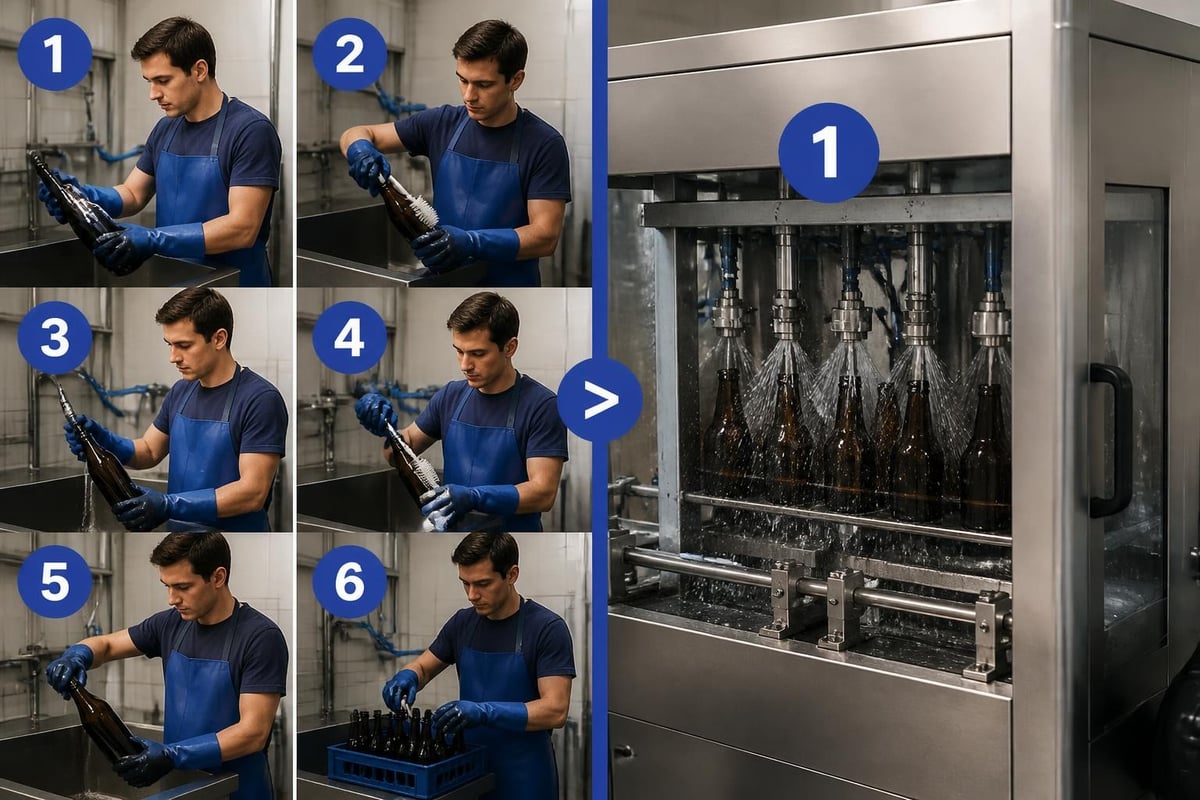
Not every parent needs one. If you're exclusively breastfeeding and only occasionally using a bottle, hand washing works fine. But certain situations make a feeding bottle washing machine worthwhile.
You're a strong candidate if:
The CDC's guidance on cleaning infant feeding items emphasizes the importance of thorough cleaning and sterilization, particularly for babies under three months, preterm infants, or those with weakened immune systems.
One bottle a day? Not worth it. Eight bottles plus pump parts? Absolutely worth it.
A feeding bottle washing machine pays off when volume tips from manageable to relentless. If you're washing bottles more than three times daily, the time saved adds up fast. Fifteen minutes per wash session, four times a day, is an hour. Every single day.
Not all machines are built the same. Some are rebranded dishwasher drawers that don't actually sterilize. Others lack proper drying, leaving bottles damp and vulnerable to bacterial growth.
| Feature | Why It Matters | What to Check |
|---|---|---|
| Capacity | Determines how many bottles per cycle | Should fit 6-8 standard bottles or full pump set |
| Sterilization | Kills bacteria, not just rinses | Steam sterilization at proper temperature |
| Drying | Prevents bacterial growth in damp conditions | HEPA-filtered air drying, not just air circulation |
| Storage | Keeps bottles sterile between feeds | Sealed chamber with sterile hold (24-72 hours) |
| Cleaning power | Removes milk residue completely | 360° spray jets, multiple pressure settings |
Sterilizing baby bottles isn't optional for newborns. Their immune systems can't handle the bacteria that builds up on improperly cleaned bottles.
Steam sterilization is the gold standard. It reaches temperatures that kill harmful pathogens without chemical residue. The NHS recommends sterilizing until babies are at least 12 months old.
Cold water sterilization works, but requires tablets and soaking time. Boiling works, but you still need to dry and store properly. A feeding bottle washing machine with built-in steam sterilization handles everything in sequence.
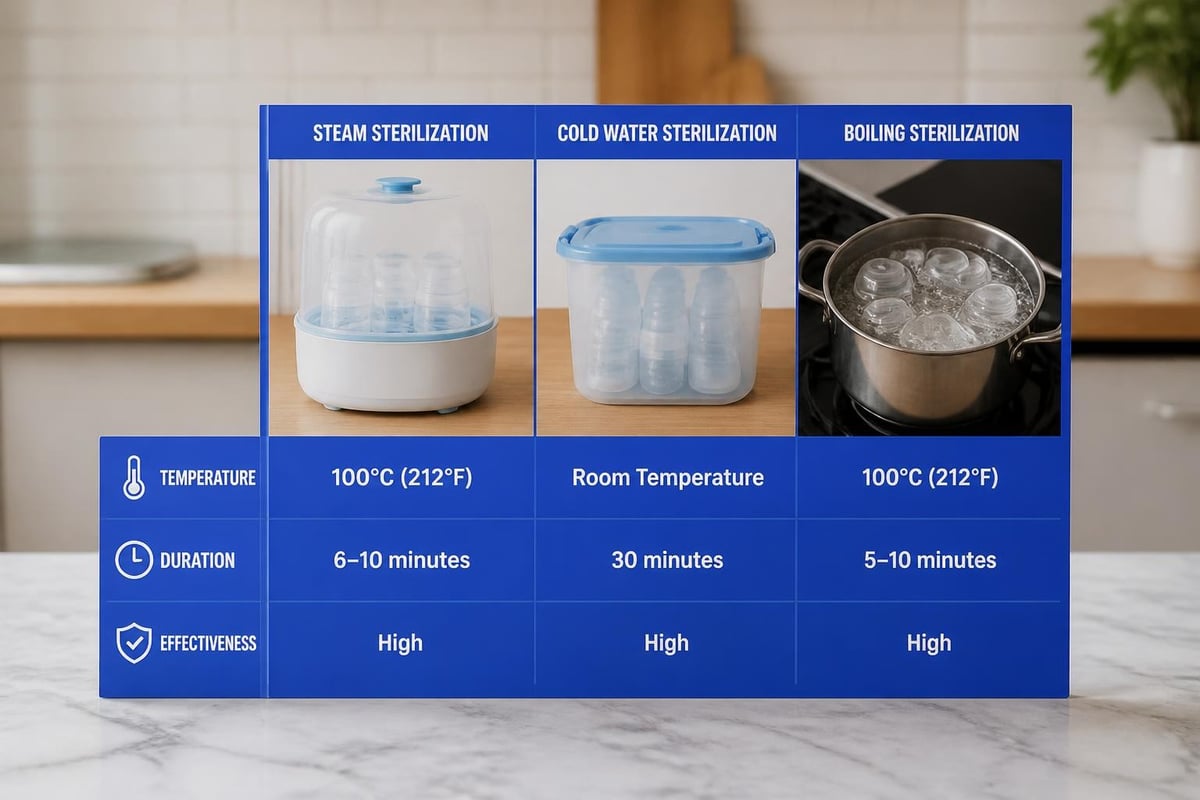
A feeding bottle washing machine isn't a set-and-forget appliance. It needs water, detergent, electricity, and periodic maintenance.
Typical running costs per month:
The biggest ongoing cost is the proprietary detergent. Most feeding bottle washing machines require specific tablets because standard dish soap creates too much foam and leaves residue on bottles. That's not a cash grab. Foam clogs the spray jets. Residue is unsafe for babies.
Hard water leaves mineral deposits inside the machine. If you live in a hard water area, descaling moves from monthly to fortnightly. Skip it, and spray pressure drops. Performance suffers.
HEPA filters trap airborne particles during the drying cycle. They need replacing every few months depending on use. A clogged filter means longer drying times and potential moisture buildup.
For guidance on keeping your machine running properly, check the user guide and support resources specific to your model.
If you're serious about automating bottle washing, the nuviebaby Clean™ 4-in-1 Bottle Washer was built specifically for this. It washes, steam-sterilizes, dries, and stores up to eight bottles or a full set of pump parts in one cycle.
Two parents built it because they were exhausted by the same relentless chore you're facing. 360° high-pressure spray jets hit every surface. Nine cleaning modes handle different bottle types and soil levels. HEPA-13 filtered drying ensures bottles come out completely dry, not damp. 72-hour sterile storage means you can run a cycle and pull out clean bottles as you need them.
It takes one less thing off your plate when you're already doing too much.
You can, but there are trade-offs. A dishwasher cleans, but it doesn't sterilize at the temperatures required for newborn bottles. It doesn't dry bottles properly (they come out damp). And it takes up space you might need for actual dishes.
Some parents run bottles through the dishwasher daily and sterilize separately. That's two steps instead of one. A feeding bottle washing machine combines both.
Most models run at 45-55 decibels. That's quieter than a dishwasher, about the level of a normal conversation. Not silent, but not disruptive if you're running a cycle during the day.
Fair concern. If breastfeeding is going well and bottles aren't part of your routine, a feeding bottle washing machine is overkill. But if you're planning to return to work, share feeding duties, or pump regularly, it's worth considering.
A feeding bottle washing machine sits on your worktop. It needs access to water (either a reservoir you fill manually or a connection to your tap) and drainage (into the sink or via a drain hose).
Footprint and setup:
If worktop space is tight, measure before buying. Some kitchens can't accommodate another appliance. Others have a corner or section of worktop that works perfectly.
Extensions like a 1.5m extended drain hose give you flexibility if your sink is further away.
Let's be direct. If you're only using one or two bottles a day, hand washing takes five minutes. A feeding bottle washing machine won't save meaningful time.
Skip it if:
A feeding bottle washing machine is built for volume and repetition. It earns its place when washing bottles is a daily grind, not an occasional task.
The CDC's FAQ on infant feeding items makes clear that proper cleaning and sterilization protect babies from harmful bacteria. Babies under three months are particularly vulnerable.
A systematic review of cleaning methods for child feeding equipment found that mechanical cleaning combined with sterilization is more effective than hand washing alone. Some US states, like Louisiana, even mandate mechanical cleaning for childcare facilities.
What this means for you:
For peace of mind about how often to replace bottles and proper bottle hygiene, check resources specific to infant bottle care.
A feeding bottle washing machine costs between £200 and £400 depending on capacity and features. That's a lot upfront.
Compare the alternatives:
| Method | Upfront Cost | Time Per Day | Running Costs |
|---|---|---|---|
| Hand washing | £10-20 (brushes, drying rack) | 45-60 minutes | Soap, hot water |
| Dishwasher + separate sterilizer | £40-80 (sterilizer only) | 20-30 minutes | Detergent, electricity |
| Feeding bottle washing machine | £200-400 | 5 minutes (loading) | Detergent tablets, electricity, water |
The time saved is where a feeding bottle washing machine justifies itself. An hour daily over six months is 180 hours. That's a week of your life.
If time matters more than money, it's worth it. If budget is tight and hand washing is manageable, it's a luxury.
A feeding bottle washing machine is convenient until it isn't. What happens when the power goes out, the machine breaks, or you're travelling?
The CDC's emergency guidance for cleaning bottles when clean water is limited offers practical backup methods. Boiling water, if available, sterilizes bottles. Bottled water works for washing. Chemical sterilizing tablets don't require electricity.
Keep backup supplies on hand:
A feeding bottle washing machine is brilliant until it isn't available. Know how to wash bottles manually as a fallback.
A feeding bottle washing machine is only worthwhile if it lasts. Cheap models fail within a year. Well-built ones run for years.
Check warranty terms before buying:
If you're investing in a feeding bottle washing machine, protect that investment. Some brands offer extended warranty options that cover you beyond the standard period.
You've decided a feeding bottle washing machine makes sense. Here's how to get the most from it.
Use it properly:
Don't overfill. Don't skip maintenance. Don't use the wrong detergent. Those three mistakes account for most performance complaints.
For more on keeping bottles properly clean, see guidance on infant bottle cleaners and best practices.
A feeding bottle washing machine won't fix sleep deprivation or make feeding easier, but it will take the most relentless cleaning chore off your plate. If you're drowning in bottles and running out of time, it's one less thing to do. nuviebaby was founded by two parents who built exactly that: a machine that washes, sterilizes, dries, and stores bottles so you don't have to stand at the sink one more time tonight.
Find the best cleaning tablets for baby bottles. Compare formulas, safety standards, and what really works for busy parents in ...

Looking for an avent bottle cleaner solution? Learn the best cleaning methods, products, and what actually works for Avent bott...

White spots or cloudy film on bottles after washing? It's mineral deposit from tap water, and in most cases you can sort it out...

