


Best Cleaning Tablets for Baby Bottles in 2026
Find the best cleaning tablets for baby bottles. Compare formulas, safety standards, and what really works for busy parents in ...

Malaysia opens my.nuviebaby.com, prices in RM.

You're feeding every two to three hours around the clock, which means you're washing bottles constantly. The sink fills up faster than you can empty it, and somewhere around 2 a.m., scrubbing another bottle feels like the last thing you have energy for. An infant bottle washer is designed to take that specific job off your plate, automating the wash, sterilize, dry, and store cycle so you can focus on keeping a tiny human alive instead of standing at the sink.
An infant bottle washer is a countertop appliance that handles the full cleaning process for baby bottles, pump parts, and feeding accessories. Most models wash with high-pressure water jets, then steam-sterilize to kill bacteria, dry everything with filtered air, and store items in a sterile environment until you need them again.
The goal is simple: load dirty bottles, press a button, walk away. No scrubbing. No air-drying racks taking over your kitchen. No second-guessing whether you rinsed thoroughly enough.
Dishwashers can clean bottles, but they're not built for the specifics of infant feeding equipment. Baby bottles have narrow necks and small parts that need targeted cleaning. Proper cleaning and sterilization is essential to prevent bacterial contamination, especially in the first year.
Here's what sets an infant bottle washer apart:
A dishwasher washes dishes. An infant bottle washer is purpose-built for the specific shape, size, and hygiene requirements of baby feeding gear.
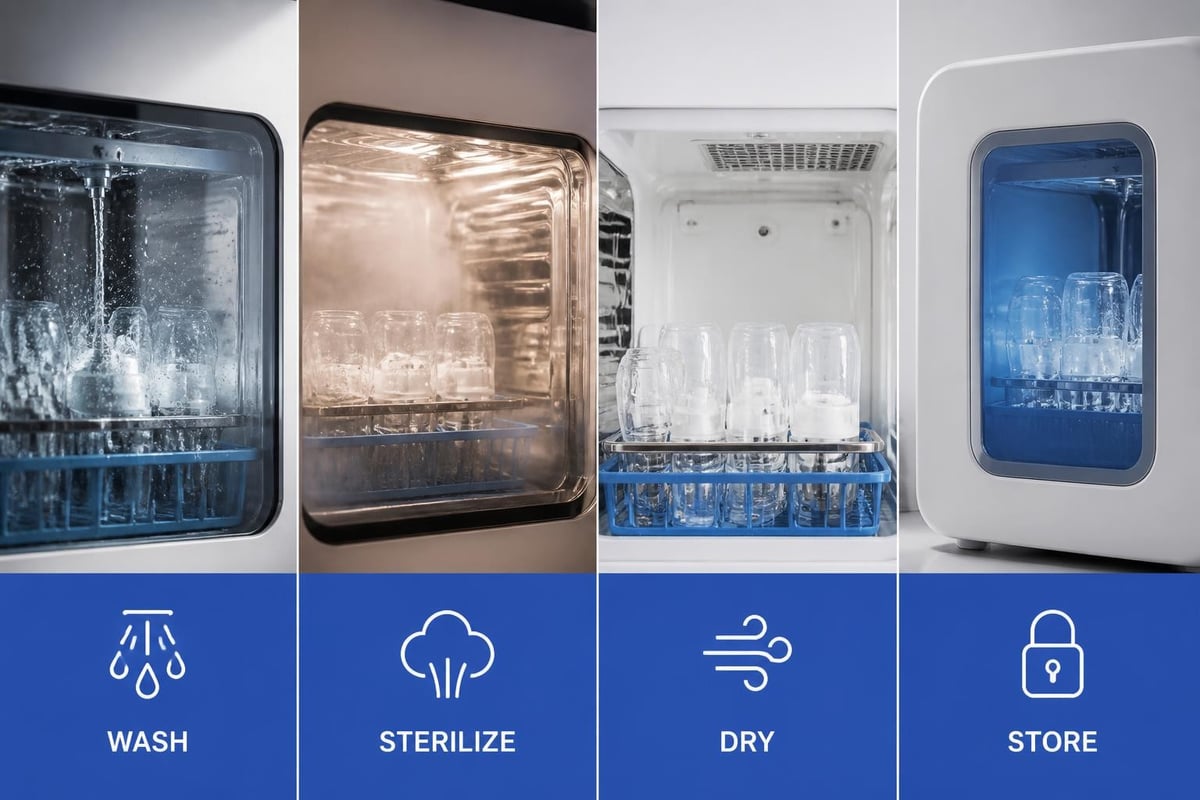
When you're feeding every few hours, bottles pile up fast. If you're exclusively bottle-feeding or pumping, you might go through eight to twelve bottles a day. That's eight to twelve rounds of disassembly, scrubbing, rinsing, sterilizing, drying, and reassembly.
The math is bleak. At ten minutes per bottle (and that's being optimistic), you're spending over an hour every single day just washing bottles. Multiply that by 365 days, and you've spent over two weeks of your first year at the sink.
It's not just the washing. It's the mental load. Remembering which bottles are clean. Checking if the sterilizer is done. Waiting for everything to dry. Realizing at midnight that you're out of clean bottles and starting the whole process again.
Parents turn to an infant bottle washer because it collapses all of that into one automated cycle. You load it, start it, and move on. The machine does the work while you sleep, fold laundry, or just sit down for five minutes.
Not all infant bottle washers are created equal. Some are glorified sterilizers with a spray function. Others are built like miniature commercial dishwashers with multiple cleaning modes and serious drying power.
| Feature | Why It Matters | What to Look For |
|---|---|---|
| Capacity | You need to fit a full day's bottles in one cycle | 6-8 bottles minimum, plus pump parts |
| Cleaning modes | Different bottles and parts need different cycles | At least 3-4 modes (quick, standard, heavy, sterilize-only) |
| Drying system | Wet bottles grow bacteria and mold | HEPA-filtered heated air, not passive air-dry |
| Sterilization | Kills bacteria without chemicals | High-temperature steam (100°C or higher) |
| Storage | Keeps bottles sterile between feedings | Sealed chamber with 48-72 hour sterile hold |
The CDC recommends thorough cleaning of all infant feeding items after every use. That means removing milk residue, formula buildup, and any bacteria that might be lurking in bottle threads or valve crevices.
Look for an infant bottle washer with:
Standard dish soap can leave residue or damage certain bottles. A good infant bottle washer uses proprietary tablets designed specifically for baby feeding equipment.
Sterilization isn't required for every single bottle if you're using municipal tap water and your baby is healthy. But it's recommended for newborns, preterm infants, and babies with compromised immune systems. It's also a good idea for the first three months or if you're using well water.
Steam sterilization uses high-temperature steam (100°C or higher) to kill bacteria, viruses, and fungi. It's chemical-free, leaves no residue, and is the standard in hospitals.
Chemical sterilization uses tablets or liquid solutions. It works, but you have to rinse everything afterward, and some parents worry about residue.
An infant bottle washer with built-in steam sterilization does the job in the same cycle as washing, with no extra steps. One machine, one cycle, everything clean and sterile.
Wet bottles are a breeding ground for mold and bacteria. Leaving bottles to air-dry on a rack might seem fine, but moisture can pool in threads, around nipples, and inside valve assemblies.
A proper infant bottle washer includes a heated drying cycle with HEPA-filtered air. That means:
If bottles come out damp, you're not done. You're just creating a new problem.
Most parents need to wash bottles at least once a day, often twice. That means your infant bottle washer needs to fit a full day's worth of bottles and pump parts in one go.
A typical infant bottle washer holds:
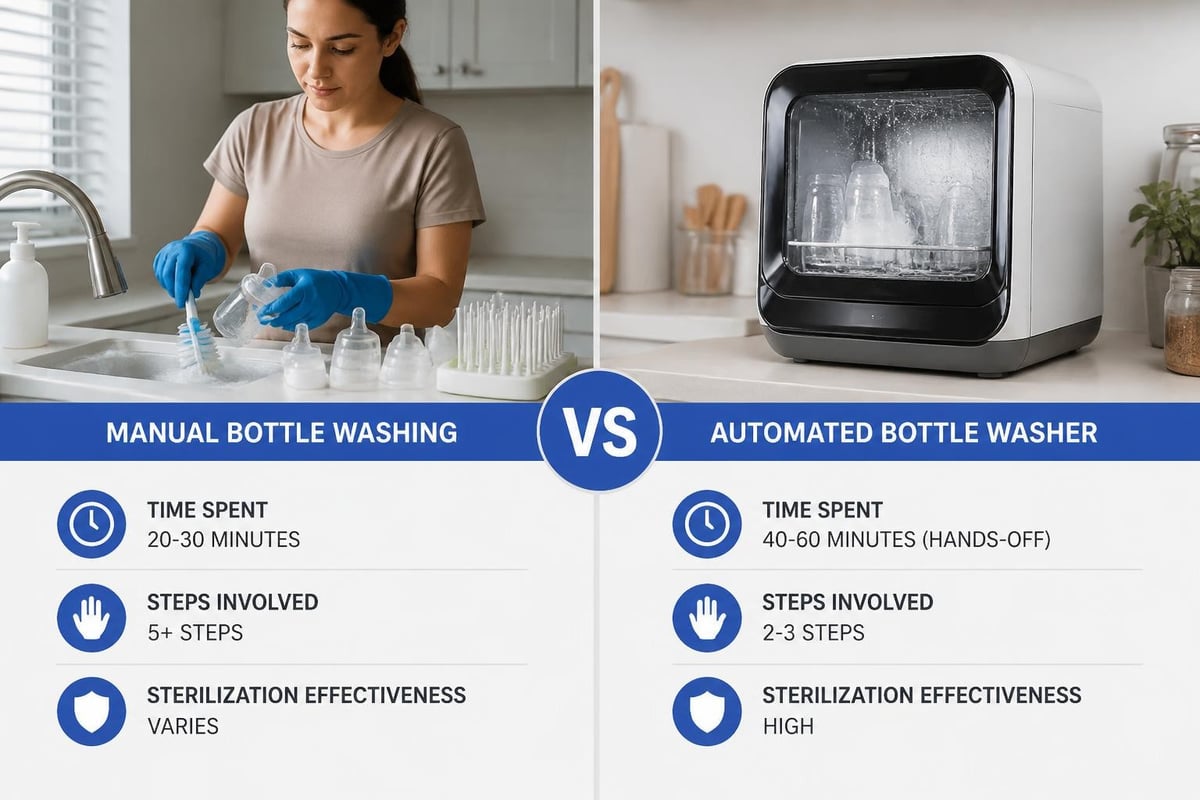
Full cycles (wash, sterilize, dry, store) usually take 90-120 minutes. That sounds long, but you're not standing there. You load it before bed, run it overnight, and wake up to clean bottles.
Quick wash modes (just wash and sterilize, skip drying) take 30-45 minutes for when you're in a pinch.
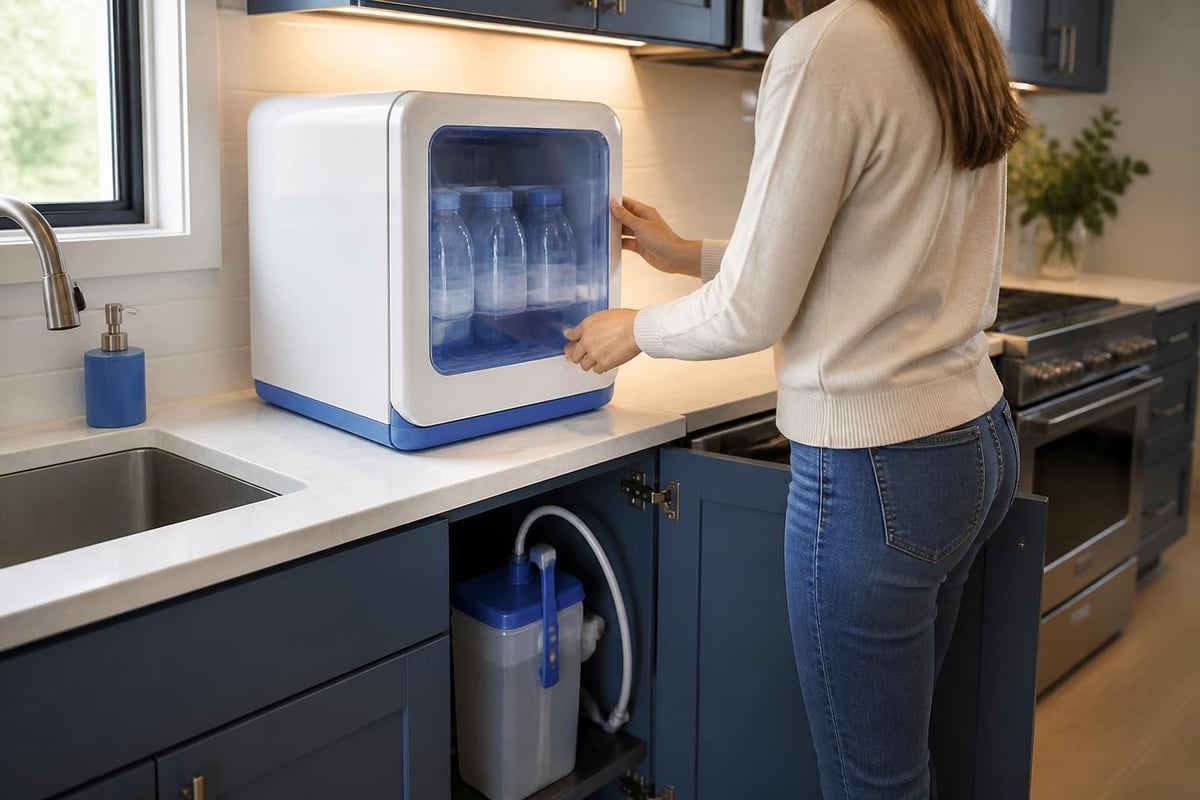
Countertop infant bottle washers are about the size of a large microwave. You'll need:
Most models use a refillable water tank, which gives you flexibility on placement. You don't need to be right next to the sink.
Different bottles and different levels of mess need different cycles. A good infant bottle washer offers multiple modes so you're not running a two-hour heavy-duty cycle on a bottle that only needs a quick rinse.
The nuviebaby Clean is a 4-in-1 countertop machine that washes, steam-sterilizes, dries, and stores up to 8 baby bottles or a full set of pump parts in one cycle, with 9 cleaning modes to handle everything from a quick rinse to deep cleaning dried formula.
Some parents only need sterilization because they hand-wash out of habit. Others want a full automated cycle. The ability to pick and choose based on what you actually need saves time and water.
Your infant bottle washer isn't self-cleaning. It needs the right detergent and regular descaling to keep running properly.
Standard dish soap creates too much foam, leaves residue, and can damage the machine's spray jets. Baby bottles also require gentler surfactants that won't irritate sensitive skin or upset tiny stomachs.
Most infant bottle washers require proprietary tablets designed specifically for the machine. They're low-foam, residue-free, and formulated to break down milk fat and formula proteins without harsh chemicals.
Tap water contains minerals (calcium, magnesium) that build up over time, especially if you have hard water. Limescale clogs spray jets, reduces water pressure, and shortens the machine's lifespan.
Descale monthly as standard maintenance, or every two weeks if your water is hard. Use descaling tablets designed for infant bottle washers to dissolve mineral buildup without damaging internal components.
An infant bottle washer is an upfront investment, typically £200-£400 depending on features and capacity. That's not pocket change when you're buying nappies, formula, and a cot.
But let's do the math. If you're spending an hour a day washing bottles and you value your time at even £10/hour, that's £3,650 over the first year. Suddenly a £300 machine that cuts that time to five minutes a day (loading and unloading) looks like a bargain.
An infant bottle washer makes the most sense if:
It's less essential if:
An infant bottle washer should last through multiple children if you maintain it properly. That means:
Most manufacturers offer warranties (1-2 years standard) and sell replacement parts (spray arms, filters, seals). Check the warranty policy before you buy so you know what's covered if something goes wrong.
| Method | Time per Bottle | Sterilization | Drying | Capacity | Cost |
|---|---|---|---|---|---|
| Manual washing | 8-10 minutes | Requires separate sterilizer | Air-dry rack (slow, risk of mold) | Unlimited | £0 (plus time) |
| Dishwasher | 5 minutes prep, 90-120 min cycle | No (unless separate sterilizer) | Yes, but not HEPA-filtered | 6-12 bottles | £0 (already own) |
| Infant bottle washer | 2 minutes load, 90-120 min cycle | Yes, built-in steam | Yes, HEPA-filtered | 6-8 bottles | £200-£400 |
Manual washing gives you full control but eats your time. Dishwashers are convenient but don't sterilize. An infant bottle washer automates the full process but requires counter space and upfront cost.
If you're exclusively pumping, you're washing bottles and pump parts after every session. That's six to eight times a day. An infant bottle washer becomes a second pair of hands. Load the parts from your morning pump, run the cycle, and they're ready by afternoon.
Formula leaves a film that's harder to clean than breast milk. You need hot water and thorough scrubbing to break down the proteins and fats. An infant bottle washer's high-pressure heated spray handles it without you having to scrub each bottle by hand.
If you're mixing breast milk and formula, you're washing bottles constantly. An infant bottle washer gives you consistency. Every bottle gets the same clean, whether it held breast milk, formula, or both.
Feeding twins means double the bottles, double the pump parts, and double the washing. An infant bottle washer with 8-bottle capacity handles a full day's feeding in one cycle. That's the difference between spending two hours at the sink and spending five minutes loading a machine.
Research shows that proper sterilization and cleaning procedures significantly reduce bacterial contamination in infant feeding equipment. Steam sterilization at 100°C or higher is one of the most effective methods.
When evaluating an infant bottle washer, check for:
If you're caring for a newborn or preterm infant, sterilization isn't optional. An infant bottle washer that automates this step removes the guesswork and ensures every bottle meets hygiene standards.
You can, but dishwashers don't sterilize, don't dry with filtered air, and don't store bottles in a sterile environment. You'll still need a separate sterilizer and drying rack. An infant bottle washer consolidates all of that into one machine.
Calculate the time cost. An hour a day at £10/hour is £3,650 a year. Even at minimum wage, your time has value. If an infant bottle washer saves you 45 minutes a day, it pays for itself in two to three months.
It's about the size of a microwave. If you have space for a coffee maker or a toaster oven, you have space for an infant bottle washer. And it replaces your drying rack, sterilizer, and bottle brush setup, so you might actually gain counter space.
Most babies use bottles until 12-18 months. If you're pumping, add another few months. If you have a second child, you'll use it again. And many parents find they use it for sippy cups, pacifiers, and small toddler dishes well past the bottle stage. You're looking at two to four years of use, not one.
Start with capacity. How many bottles do you use in a day? If it's six or fewer, a smaller model works. If it's eight or more (or you're feeding multiples), you need full capacity.
Next, consider cycles. Do you need quick wash for emergency cleanups? Heavy-duty for formula buildup? Sterilize-only if you sometimes hand-wash?
Then look at drying. HEPA-filtered heated air is non-negotiable if you want bottles truly dry and ready to store.
Finally, check maintenance requirements. How often do you need to descale? Are replacement filters easy to find? Is the interior easy to wipe down?
For more detailed guidance on maintaining baby bottles, see how often you should change baby bottles to keep feeding equipment in top condition.
An infant bottle washer works best when it's part of your daily rhythm, not an extra task. Most parents run one cycle overnight or first thing in the morning.
Overnight routine: Load bottles after the last evening feed, start the cycle, wake up to clean bottles.
Morning routine: Load bottles from overnight feeds, run the cycle while you're getting ready, bottles are clean by mid-morning.
On-demand routine: Keep the machine loaded with clean bottles in sterile storage, grab what you need when you need it, reload and run when you're down to two or three bottles.
The key is consistency. Treat it like running the dishwasher. It becomes automatic within a week.
An infant bottle washer isn't a luxury when you're feeding every few hours and the bottles never stop piling up. It's a practical tool that collapses washing, sterilizing, drying, and storage into one automated cycle, giving you time back for the parts of parenting that actually matter. If you're ready to stop scrubbing bottles at 2 a.m., nuviebaby builds machines that do the job so you don't have to.
Find the best cleaning tablets for baby bottles. Compare formulas, safety standards, and what really works for busy parents in ...

Looking for an avent bottle cleaner solution? Learn the best cleaning methods, products, and what actually works for Avent bott...

White spots or cloudy film on bottles after washing? It's mineral deposit from tap water, and in most cases you can sort it out...

