


Best Cleaning Tablets for Baby Bottles in 2026
Find the best cleaning tablets for baby bottles. Compare formulas, safety standards, and what really works for busy parents in ...

Malaysia opens my.nuviebaby.com, prices in RM.

You already know the drill. Feed the baby, rinse the bottle, scrub the parts, sterilize everything, wait for it all to dry, put it away, then do it again in three hours. A feeding bottle washer changes that routine. It's a machine that does the work you're currently doing by hand, usually multiple times a day, every single day. If you're reading this, you're either exhausted or expecting to be, and you want to know if one of these machines is worth it. Here's what you actually need to know.
A feeding bottle washer is a countertop appliance that automates the cleaning, sterilizing, and often the drying of baby bottles and pump parts. You load dirty bottles and parts into the machine, add detergent, press a button, and walk away. The machine handles the rest.
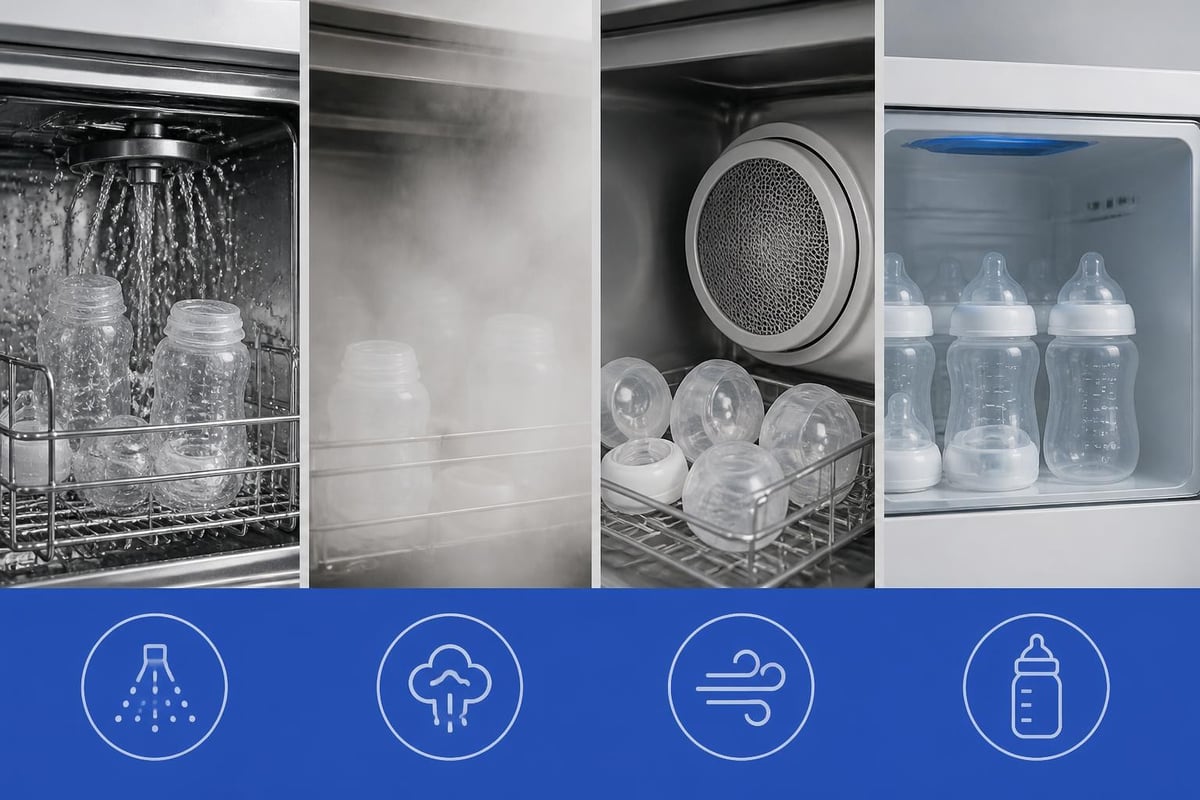
Most models use high-pressure water jets to clean, steam to sterilize, and heated air to dry. The entire process takes anywhere from 30 minutes to two hours depending on the cycle you choose. Some machines also store the clean bottles in a sterile environment for up to 72 hours, which means you can wash once and pull out clean bottles as you need them.
Not every feeding bottle washer does all four. Some only wash and sterilize. Others skip the drying step entirely. Know what you're getting before you buy.
Hand washing bottles isn't difficult. It's just relentless. You're doing it six to eight times a day in the early months, often while the baby is crying or you're trying to get three hours of sleep. The CDC recommends specific cleaning and sanitizing protocols for infant feeding items, and following them properly takes time you don't have.
A traditional baby bottle brush can also leave milk residue behind even when you think you've scrubbed thoroughly. Research shows that bottle brushes often fail to remove all traces of milk, which creates a hygiene risk most parents don't realize exists.
The real appeal of a feeding bottle washer is that it removes the task from your plate entirely. You're not standing at the sink. You're not scrubbing. You're not boiling water or running a separate sterilizer. The machine does it while you do literally anything else.
| Task | Hand Washing | Feeding Bottle Washer |
|---|---|---|
| Rinse and scrub | 3-5 minutes per bottle | 0 minutes (machine does it) |
| Sterilize | 5-10 minutes setup | 0 minutes (automatic) |
| Dry and put away | 10-15 minutes waiting | 0 minutes (machine dries) |
| Total active time | 18-30 minutes per cycle | 1 minute to load and start |
Not all machines are built the same. Some are glorified dishwasher baskets. Others are purpose-built for bottles and pump parts. Here's what actually matters.
How many bottles does it hold? If you're exclusively bottle feeding, you'll go through six to eight bottles a day in the first months. A machine that only holds three or four bottles means you're running it twice a day, which defeats the point. Look for capacity of at least six to eight bottles per cycle.
Pump parts matter too. If you're pumping, you need a machine that can handle flanges, valves, membranes, and bottles all in one go. Some machines have dedicated pump part racks. Others make you choose between bottles or parts, not both.
The machine needs actual spray jets, not just a water bath. Look for 360-degree coverage or multi-angle spray arms that hit every surface. High-pressure water matters. Gentle rinsing doesn't cut through dried formula or milk fat.
Check if the machine requires proprietary detergent. Some do, some don't. Proprietary tablets are formulated to be low-foam and residue-free, which matters more than you'd think. Regular dish soap can leave a film on bottles or damage the machine over time.
A feeding bottle washer that doesn't dry properly leaves you pulling out damp bottles that need to air dry anyway. Look for heated drying with a HEPA filter. The filter keeps dust and particles out while drying, and the heat ensures bottles are completely dry when the cycle ends.
Drying time varies. Some machines dry in 30 minutes, others take 90. If you're in a rush between feeds, drying speed matters.
Steam sterilization is the gold standard. It's chemical-free, effective, and gentle on bottles. Most feeding bottle washers use steam, but confirm before you buy. Studies on infant feeding equipment cleaning methods show that steam is one of the most reliable ways to eliminate harmful bacteria.
Some machines offer UV sterilization as a secondary option. It's a nice extra but not essential. Steam does the job.
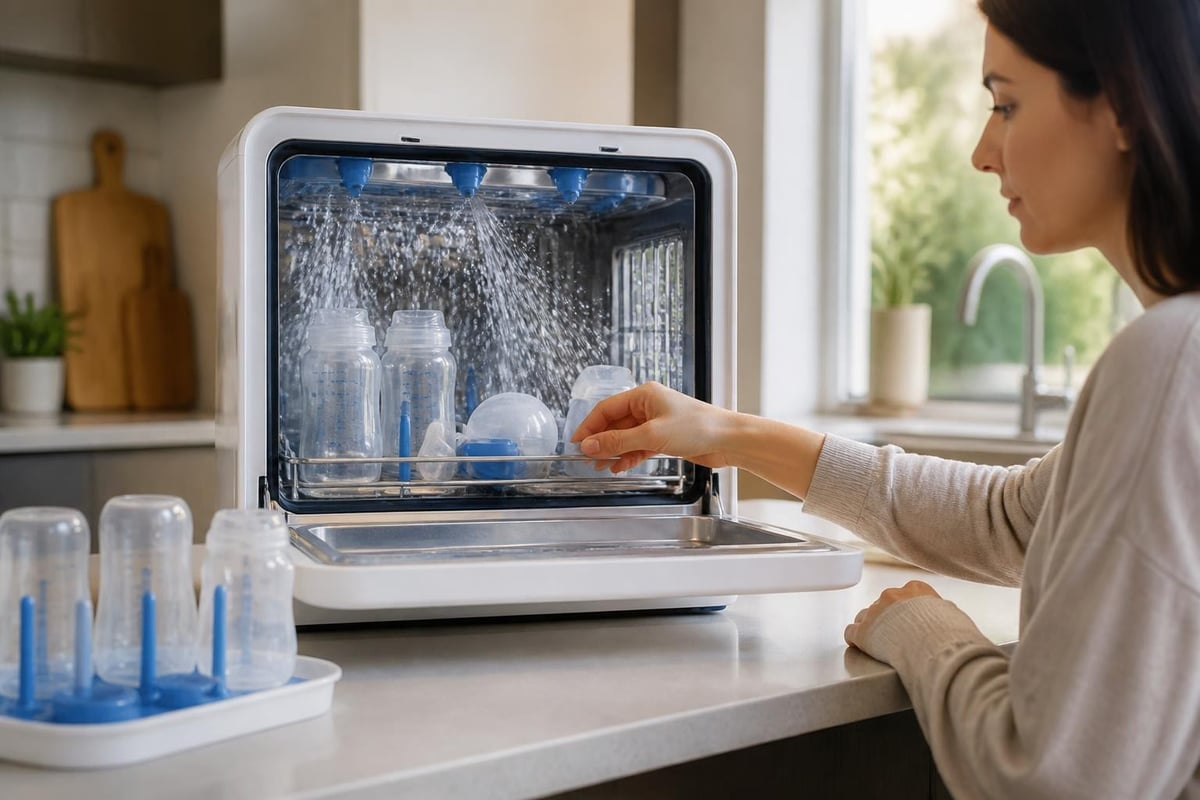
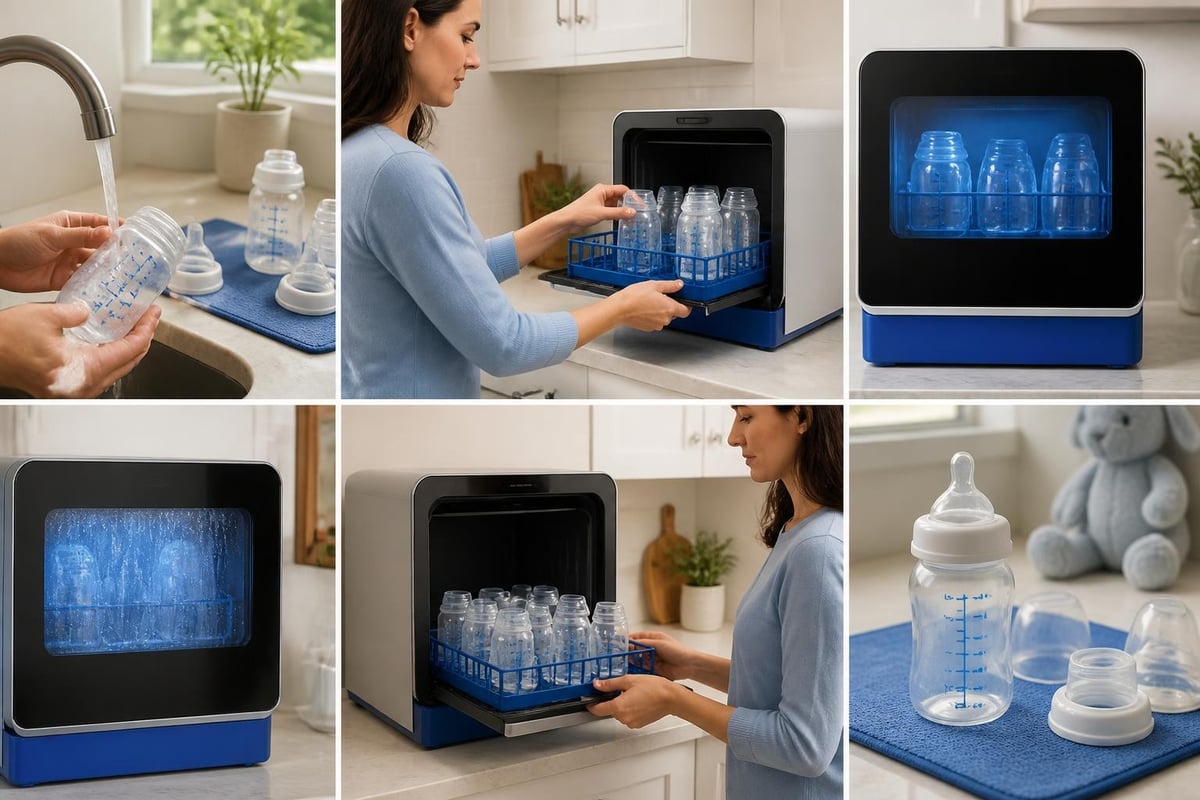
The machine doesn't replace every bit of bottle care. You still rinse bottles after a feed to prevent milk from drying inside. But instead of scrubbing, sterilizing, and drying, you load the rinsed bottles into the machine and press start.
Most parents run one or two cycles per day. If you're combination feeding or exclusively pumping, you might run it more often. The machine works while you're feeding the baby, sleeping, or doing any of the thousand other things on your list.
Storage mode is particularly useful overnight. The machine keeps bottles sterile for up to 72 hours, so you can load it once and pull out bottles as you need them without worrying about recontamination.
No. Dishwashers aren't designed for baby bottles. They don't reach the temperatures needed for proper sterilization, they don't have the precision spray patterns to clean narrow bottle necks and nipple holes, and they take two to three hours per cycle. A feeding bottle washer is purpose-built for bottles, uses steam sterilization, and finishes in under an hour for most cycles. The difference in results is significant.
For parents looking for a more effective solution than hand washing or standard dishwashers, an infant bottle cleaner addresses the specific challenges of cleaning feeding equipment safely and thoroughly.
Yes. You should still check bottles regularly for cracks, cloudiness, or wear. Knowing when to replace baby bottles is part of safe feeding practices, regardless of how you clean them. A feeding bottle washer keeps bottles cleaner longer, but it doesn't make damaged bottles safe to use.
Hard water leaves mineral deposits inside the machine over time. Most manufacturers recommend descaling monthly or bi-weekly if you have particularly hard water. It's a simple maintenance task that keeps the machine running properly. Skipping it can reduce cleaning effectiveness and shorten the machine's lifespan.
A feeding bottle washer won't work miracles. If you load in bottles with dried, caked-on formula from yesterday, the machine will struggle. A quick rinse after each feed makes a massive difference in cleaning results. Thirty seconds at the sink saves you from scrubbing later.
The machine also needs basic maintenance. Empty the filter, wipe down the interior, run a descaling cycle monthly. It's far less work than hand washing every bottle, but it's not zero maintenance.
| Aspect | Parent Feedback |
|---|---|
| Time saved | 1-2 hours per day reclaimed |
| Cleaning quality | Better than hand washing, especially for pump parts |
| Convenience | Significant reduction in mental load |
| Maintenance | Minimal but necessary (descaling, filter cleaning) |
| Would buy again | Overwhelming majority say yes |
Most feeding bottle washers sit on your kitchen counter like a coffee maker. They plug into a standard outlet and connect to your sink faucet with a hose for water supply. Some models have a built-in water tank instead, which eliminates the faucet connection but means you need to refill it manually.
Drainage works one of two ways. Some machines drain directly into your sink via a drain hose. Others collect wastewater in an internal tank you empty after each cycle. The sink-drain models are more convenient but require counter space near the sink.
A typical feeding bottle washer takes up about the same footprint as a microwave. Expect to dedicate 40-50cm of counter width and 35-40cm of depth. Height varies but plan for 40-45cm clearance.
If counter space is tight, look for a compact model or consider whether you can give up another appliance. Most parents find the trade-off worth it. The toaster can live in the cupboard. The bottle washer earns its spot.
Feeding bottle washers designed for home use don't require the same certifications as commercial or laboratory equipment, but quality manufacturers still follow strict safety and performance standards. Mechanical bottle washer regulations in commercial settings provide insight into what proper sanitization requires, and the best home machines meet or exceed those benchmarks.
Laboratory-grade bottle washers use similar technology to consumer models but at a much larger scale and price point. The core principles of high-pressure washing, steam sterilization, and controlled drying apply across all serious bottle washing equipment.
The nuviebaby Clean™ brings those professional-grade features into a countertop appliance built specifically for parents. It handles up to eight bottles or a full pump session in one cycle, with 360° spray jets, nine cleaning modes, and HEPA-13 filtered drying. It's designed to make one relentless chore completely automatic.
Most feeding bottle washers require low-foam, residue-free detergent. You can't use regular dish soap. The foam interferes with cleaning, and residue can coat bottles or damage internal components. Proprietary tablets are the safest option, even if they cost more upfront.
A typical detergent tablet costs between £0.30 and £0.50 per cycle. If you run one cycle per day, that's £10-15 per month. Add in electricity and water use (minimal, usually £2-3 per month), and total running costs sit around £12-18 monthly. Compare that to the cost of takeaway because you're too exhausted to cook. The machine pays for itself quickly.
Pump parts are harder to clean than bottles. Flanges, valves, membranes, and backflow protectors all have small crevices where milk hides. Hand washing pump parts properly takes as long as washing four bottles. A feeding bottle washer with dedicated pump part holders makes the job far easier.
Look for adjustable racks or baskets that keep small parts secure during the wash cycle. High-pressure jets need to reach every surface, so parts shouldn't be stacked or overlapping. The best machines have purpose-built holders for valves and membranes that keep them separated and fully exposed to the spray.
Research on bottle material and cleansing procedures shows that thorough cleaning of all feeding equipment, including pump parts, is essential for infant health. A feeding bottle washer removes the guesswork and ensures consistent results every time.
A feeding bottle washer is an investment, not an impulse buy. Prices range from £150 for basic models to £400+ for machines with all the features. Before you commit, consider how many bottles you use daily, how much counter space you have, and whether you're pumping.
If you're bottle feeding exclusively or combination feeding, the time savings are immediate and significant. If you're only doing one or two bottles a day for supplemental feeds, the value proposition changes. Be honest about your routine.
A feeding bottle washer automates the most repetitive chore of early parenthood, giving you back time and mental space you desperately need. It's not about laziness. It's about survival. If you're drowning in bottles and pump parts, a machine that handles the work while you handle everything else is a genuine lifeline. nuviebaby builds bottle washers for parents who want one less thing to do, because you already have enough on your plate.
Find the best cleaning tablets for baby bottles. Compare formulas, safety standards, and what really works for busy parents in ...

Looking for an avent bottle cleaner solution? Learn the best cleaning methods, products, and what actually works for Avent bott...

White spots or cloudy film on bottles after washing? It's mineral deposit from tap water, and in most cases you can sort it out...

